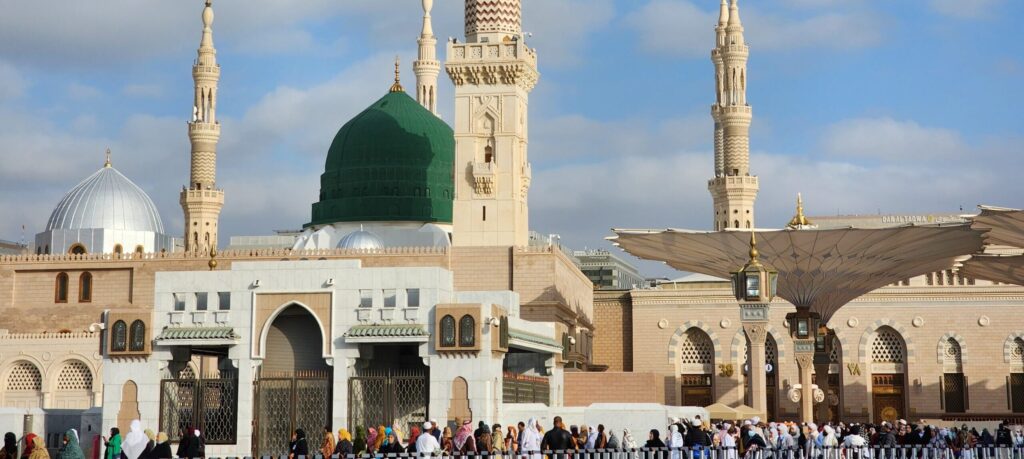
Hajj vs. Umrah: A Complete Guide for Travelers Coming from the USA
Every year, millions of people from around the world make their way to the holy city of Mecca in Saudi Arabia, not for a vacation, not for sightseeing, but for something far more profound. Whether you’re a Muslim planning your first spiritual journey or a curious non-Muslim wanting to understand one of the world’s most remarkable religious traditions, this guide will walk you through everything you need to know about two of Islam’s most sacred pilgrimages: Hajj and Umrah.
The Heart of the Matter: What Are Hajj and Umrah?
In Islam, the journey to Mecca is not just a trip but it’s a return. A return to the origins of faith, to the House of God (the Kaaba), and to a state of spiritual purity. Both Hajj and Umrah are pilgrimages made to Mecca, but they differ significantly in their timing, rituals, requirements, and spiritual weight.
Think of it this way: if Hajj is the grand annual summit of the Muslim world, Umrah is a heartfelt personal visit you can make anytime the doors are open.
What Is Umrah?
Umrah is often called the “lesser pilgrimage” — not because it’s less meaningful, but because it’s shorter and can be performed at any time of year. For American Muslims making their first journey to Mecca, Umrah is often the natural starting point.
The rituals of Umrah include:
- Ihram — Before entering Mecca, pilgrims enter a sacred state of spiritual purity called Ihram. Men wear two seamless white garments symbolizing equality before God; women dress modestly. All worldly distinctions like wealth, nationality, social status — dissolve in these simple clothes.
- Tawaf — Upon reaching the Masjid al-Haram (the Grand Mosque), pilgrims circle the Kaaba seven times in a counterclockwise direction while reciting prayers. It’s one of the most awe-inspiring sights in the world.
- Sa’i — Pilgrims then walk seven times between the hills of Safa and Marwa, commemorating the desperate search of Hajar (Hagar), the wife of Prophet Ibrahim (Abraham), for water for her infant son Ismail. It is a powerful reminder that struggle and faith go hand in hand.
- Halq or Taqsir — Finally, men shave their heads or cut their hair, and women trim a small portion of their hair, symbolizing renewal and humility.
Umrah typically takes a few hours to complete, though most pilgrims stay for several days to soak in the spiritual atmosphere.
What Is Hajj?
Hajj is the fifth pillar of Islam one of the five foundational duties of every Muslim. It is obligatory at least once in a lifetime for every Muslim who is physically and financially able. Performed during the Islamic month of Dhul Hijjah (the 12th month of the lunar calendar), Hajj is one of the largest annual human gatherings on Earth, drawing over 2 million pilgrims.
Hajj includes all the rituals of Umrah plus several additional ones:
- Wuquf at Arafat — The spiritual climax of Hajj. Pilgrims gather on the plain of Arafat on the 9th of Dhul Hijjah to stand in prayer and reflection from noon until sunset. This moment is considered so central that the Prophet Muhammad ﷺ said: “Hajj is Arafat.”
- Muzdalifah — After sunset, pilgrims travel to Muzdalifah to pray, rest under the open sky, and collect pebbles for the next ritual.
- Rami (Stoning of the Devil) — At Mina, pilgrims cast pebbles at three pillars representing the temptations that Prophet Ibrahim faced from Shaytan (Satan). It’s a symbolic rejection of evil.
- Qurbani (Sacrifice) — An animal is sacrificed in remembrance of Ibrahim’s willingness to sacrifice his son Ismail for God, who replaced him with a ram at the last moment. This act is also celebrated globally as Eid al-Adha.
- Return to Mecca — Pilgrims return to the Kaaba for Tawaf al-Ifadah and complete the remaining Sa’i and hair-cutting rituals.
Hajj spans five days (8th–12th Dhul Hijjah), though the overall journey for most pilgrims lasts 2–4 weeks.
Key Differences at a Glance
Feature | Umrah | Hajj |
Obligation | Recommended (Sunnah) | Obligatory (Fard) once in a lifetime |
Timing | Any time of year | Specific days in Dhul Hijjah only |
Duration | A few hours to days | 5 days of core rituals |
Rituals | Ihram, Tawaf, Sa’i, Halq | All of Umrah + Arafat, Muzdalifah, Stoning, Sacrifice |
Scale | Smaller, personal | Massive — 2+ million pilgrims |
Planning Your Journey from the USA
For American travelers, here’s what you should know before embarking on Umrah:
You’ll need a valid US passport and a specific Umrah visa, which is different from a tourist visa. Most travelers book through licensed Umrah travel agencies that bundle visa processing, flights, accommodation in Mecca and Madinah, and guided services. Saudi Arabia has significantly expanded access in recent years, making it easier than ever for US citizens to visit.
Flights from major US cities like New York, Chicago, Houston, and Los Angeles typically connect through Doha, Dubai, or Amman, with a total travel time of roughly 16–20 hours. Once in Saudi Arabia, most pilgrims split their time between Mecca (home of the Kaaba) and Madinah (the city of the Prophet ﷺ).
The best times for Umrah from the US include Ramadan (when spiritual rewards are multiplied), winter months (for milder weather), and after Hajj season when crowds are smaller.
Frequently Asked Questions (FAQs)
Q: Can non-Muslims perform Umrah or Hajj? No. Non-Muslims are not permitted to enter Mecca or Madinah or perform either pilgrimage. These cities are exclusively sacred to Muslims.
Q: Is Umrah the same as Hajj in terms of spiritual reward?
Both are deeply rewarding acts of worship, but Hajj carries greater spiritual weight as an obligatory pillar of Islam. Performing Umrah in Ramadan is said to carry the reward equivalent to Hajj, according to a hadith of the Prophet ﷺ.
Q: Do women need a male guardian (Mahram) for Umrah?
Saudi Arabia updated its rules in recent years. Women over 45 may now perform Umrah without a Mahram as part of an organized group. Younger women may still require one depending on the package and current regulations always confirm with your travel agency.
Conclusion
Whether you choose Umrah as a personal spiritual retreat or prepare for the life-defining journey of Hajj, both pilgrimages offer something rare in our modern world: a moment to step outside the noise of daily life and stand, shoulder to shoulder with millions of believers, in one of the most sacred places on Earth.
For American travelers taking their first steps toward Mecca, Umrah is a beautiful and accessible beginning. And for those who have already made that journey, Hajj awaits as the ultimate spiritual destination. Book your package with Experience Umrah.
May your journey be accepted, your heart be open, and your path be smooth. Ameen.